Tracked Whales
SEASON 2024 - 2025

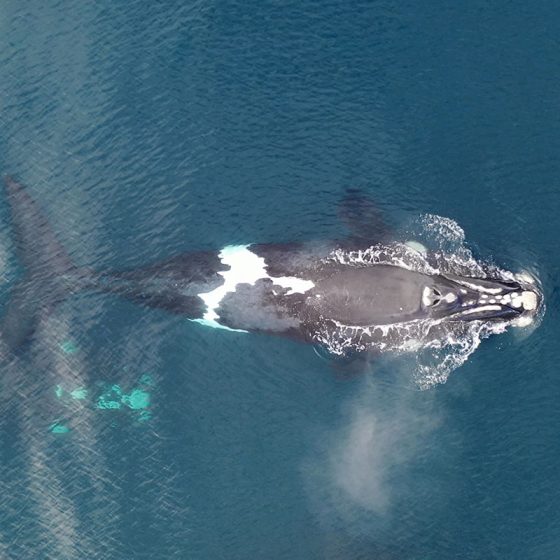
Photo: Trackingwhales Project (2024)

Main Tracking Map 2024/25

Latest update. Click on each whale to the right to see the individual trackline.

Season Reports

  • Nearly at the end of September and having completed new satellite tag deployments on Península Valdés whales, we continue tracking Moscovium and Sulfurium, the last whales with active transmitters tagged during the 2024-25 season. Niquel stopped transmitting during September when she was near the continental slope off the Rio de la Plata in Uruguayan waters.

  • One week from September, and another season of tagging Southern Right whales in Peninsula Valdés, we have established a new satellite tracking duration record for three individuals. These whales continue transmissions almost a year after being tagged: Moscovium who, after months in Sub-Antarctic Seas, in the past weeks crossed the Malvinas (Falkland) plateau towards the Patagonian Sea off Golfo San Jorge; Sulfurium who traveled over the continental shelf until arriving at the south of the Province of Buenos Aires; and Niquel who recorded the most northerly position near the continental slope at the latitude of the mouth of the Rio de la Plata.

  • We continue tracking three Southern Right Whales, out of the 10 tagged with satellite devices in September 2024. Moscovium is currently exploring the northern sector of the Scotia Sea, Sulfurium is traveling northwestwards in the deep ocean basin of the Southwest Atlantic Ocean, and Niquel is feeding on the border of the continental slope off the coast of Rio Negro province. A month has passed since we lost contact with Aurum, who had returned to Golfo Nuevo at the end of May.

  • The number of Southern Right Whales at Peninsula Valdés is increasing with the arrival of individuals for the breeding season. Of the four whales we continue tracking, only Aurum is already back in Golfo Nuevo. Niquel recently arrived at the continental slope off Chubut province but is still slightly south of the latitude of Peninsula Valdés. Moscovium and Sulfurium continue their extensive voyages in the southern oceans, exploring and feeding in deep waters near the archipelagos of the Islas Georgias (South Georgias) and the Orcadas del Sur (South Orkney Islands). We recently lost signals from the satellite tags of two whales: Titanium, after being tracked for 250 days while traveling 17,570 kilometers (10,917 miles), and Rubidium after 264 days and traveling more than 20,800 kilometers (12,925 miles).

  • Transmissions from two whales (Neptunium and Tantalus) stopped around mid-April. Of the six whales we continue tracking, Moscovium, Aurum and Titanium, are over the continental shelf off the coast of Chubut province, very close to the continental slope. The other three whales, Sulfurium, Niquel and Rubidium, have made extensive oceanic crossings and continue feeding or exploring in the deep southern oceans.

  • With the beginning of fall in the southern hemisphere, and six months after being tagged with satellite transmitters in Golfo Nuevo, we continue tracking the migratory travels of 8 Southern Right Whales. Four of these whales (Neptunium, Moscovium, Aurum and Titanium) are feeding in the shallow and productive waters of the Argentine continental shelf. The other four (Tantalus, Sulfurium, Niquel and Rubidium) are thousands of miles from Peninsula Valdés, exploring the boundaries of the Southwest Atlantic Ocean and the Antarctic seas.

  • After more than 5 months of being tracked, eight tagged whales continue transmitting their positions. During this past month Niquel and Sulfurium traveled great distances, Niquel arriving to the freezing waters of the Weddell Sea, and Sulfurium to areas near South Georgia (Islas Georgias del Sur). The other six whales continue taking advantage of the productivity of the Argentine continental shelf and the deep ocean basin in the Southwest Atlantic Ocean.

  • Eight whales with active satellite devices continue transmitting their positions. Four of them are exploring the ocean basin (Tantalus, Sulfurium, Niquel and Titanium), and the other four (Neptunium, Moscovium, Aurum and Rubidium) remain over the continental shelf, in key areas off the coasts of Chubut and Santa Cruz provinces. The movement patterns recorded by all whales suggest behaviors associated with feeding, various of them taking advantage of marine eddies and zones enriched by the Malvinas (Falklands) Current.

  • During this fourth month of tracking, the satellite tags of eight whales continue signaling their positions. Half of the whales are now in the deep ocean basin (Tantalus, Sulfurium, Niquel and Titanium), while the other four whales (Neptunium, Moscovium, Aurum and Rubidium) remain over the Argentine continental shelf.

  • Even though mid-November is still a few days ahead, no whales with satellite tags remain in Golfo Nuevo. The eight whales with active satellite tags from the current season departed earlier than those tagged in previous years, and they are all currently traveling to, or, in some cases have already arrived, in their various feeding areas.

  • After two months of tracking, we continue receiving information from eight whales. During the first days of November Kalium’s satellite tag ceased transmissions. Except for Niquel and Neptunium, all the rest of the whales are already traveling to the various feeding areas in the southern seas.

  • Nine whales have active transmitters and continue signaling their positions, seven from the breeding ground in Golfo Nuevo, while two mothers with calf, Kalium and Sulfurium, have already started their migratory journey.

  • Ten whales were equipped with long duration satellite transmitters in September. One whale’s device (Platinum) disconnected 14 days later. Nine whales are currently transmitting their positions: eight from the breeding grounds in Golfo Nuevo, and one, Kalium and her calf, have already departed the gulf on October 9th for their migration.

Tracked Whales

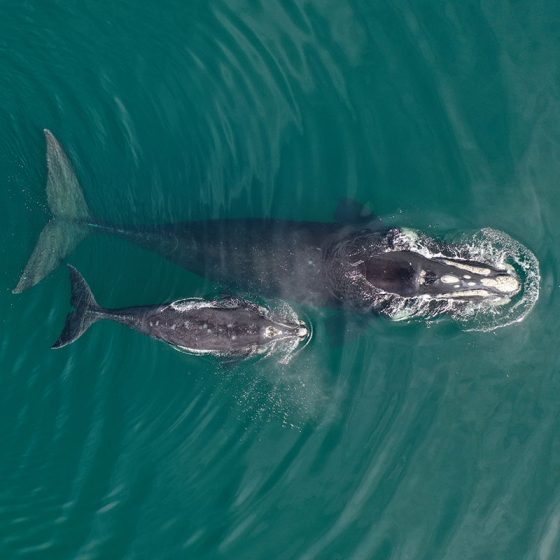
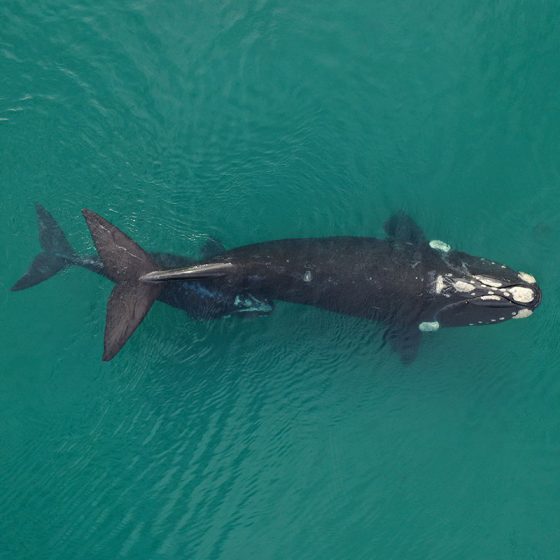
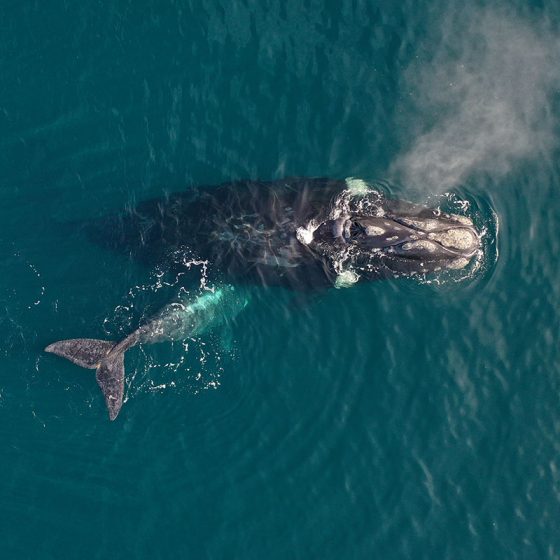
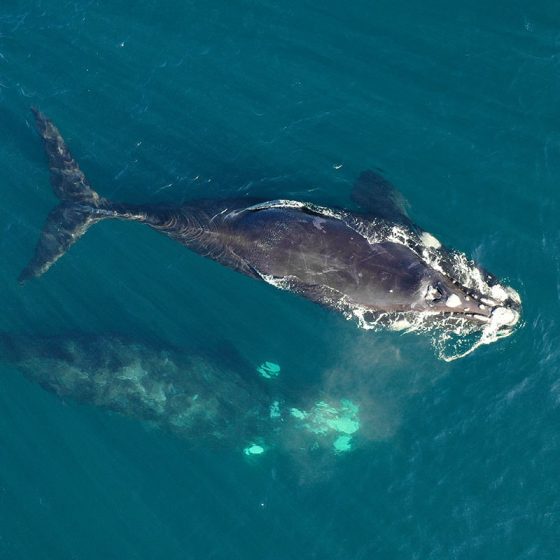
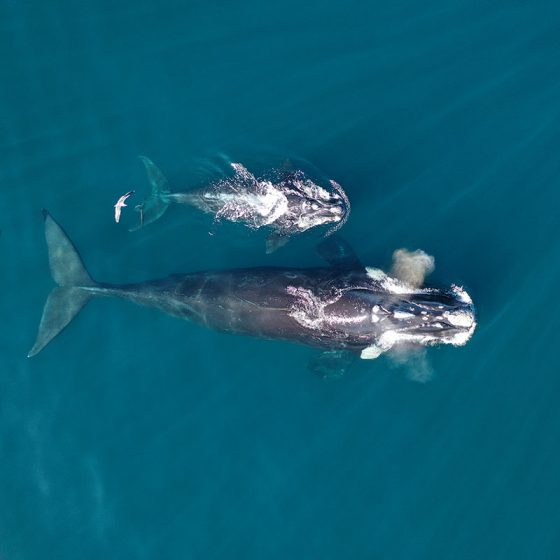
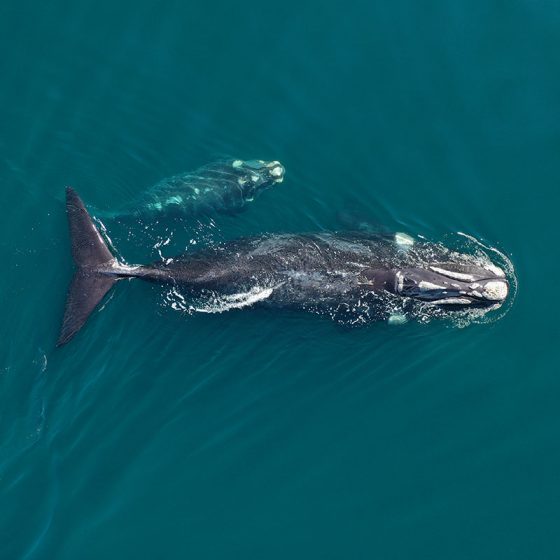
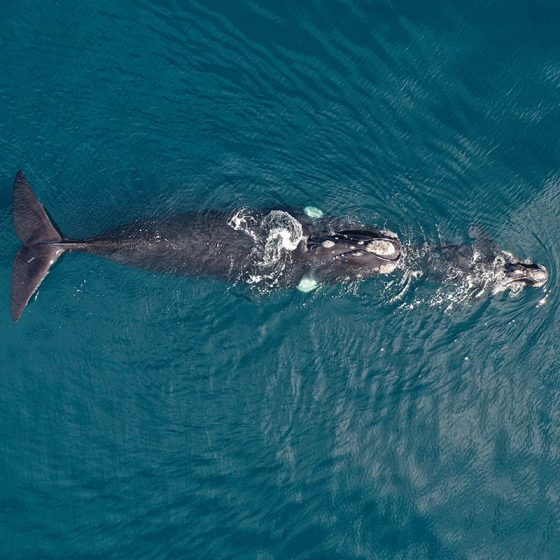
During the ninth season of the “TrackingWhales” Project, we are following the movements of 10 Southern Right Whales equipped with long duration satellite transmitters in Golfo Nuevo, Península Valdés. Our goal is to collect information on their movements at their breeding grounds and during their migration to feeding areas in the southern seas.
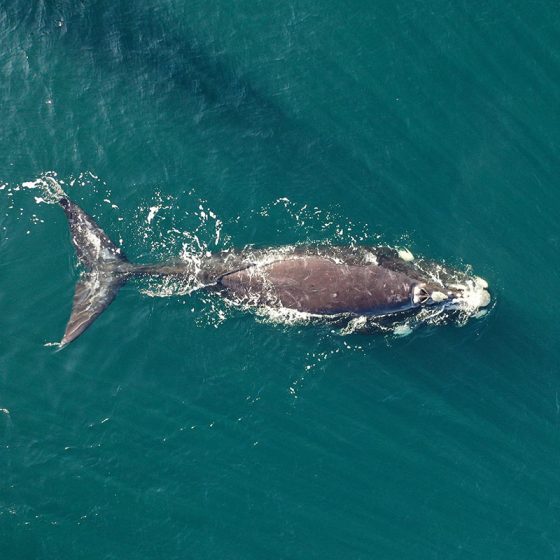
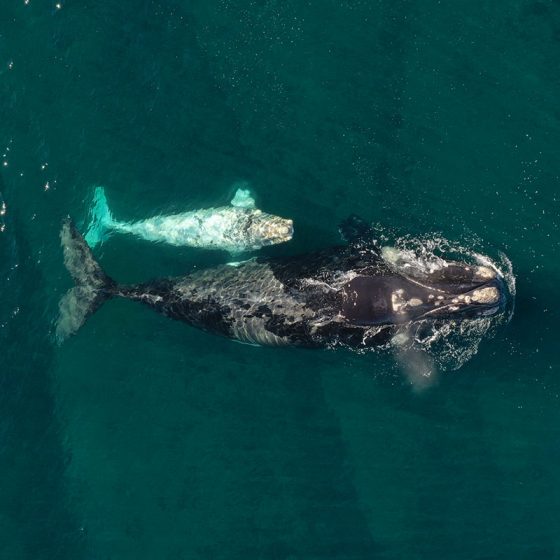
Aurum

Juvenile, sex unknown
Golfo Nuevo
Sep. 12, 2024 – Jun. 20, 2025

view more

Kalium

Female with calf
Golfo Nuevo
Sep. 8, 2024 – Oct. 31, 2024

view more

Moscovium

Female with calf
Golfo Nuevo
Sep. 17, 2024

view more

Neptunium

Female with calf
Golfo Nuevo
Sep. 17, 2024 – Apr. 17, 2025

view more

Niquel

Female with calf
Golfo Nuevo
Sep. 9, 2024 – Sep. 1, 2025

view more

Platinum

Juvenile, sex unknown
Golfo Nuevo
Sep. 12, 2024 – Sep. 26, 2024

view more

Rubidium

Adult, sex unknown
Golfo Nuevo
Sep. 8, 2024 – May 31, 2025

view more

Sulfurium

Female with calf
Golfo Nuevo
Sep. 9, 2024

view more

Tantalus

Female with calf
Golfo Nuevo
Sep. 17, 2024 – Apr. 19, 2025

view more

Titanium

Female with calf
Golfo Nuevo
Sep. 9, 2024 – May 17, 2025

view more